Project leader: Dr. Henriette Uthe
Co-Project leader: Prof. Thomas Altmann
Phenotyping of growth dynamics and abiotic stress responses under controlled field-like conditions
Staff:
- Dr. Rongli Shi
- Dr. Rhonda Meyer
- Dr. Dominic Knoch
- Dr. Markus Kuhlmann
Co-Project leader: Prof. Rod Snowdon
Benjamin Wittkop
Lars Erik Thomsen
Jason Wenzig
Assessing genotype-specific responses to early flooding stress in winter oilseed rape
Oilseed rape (Brassica napus L.) is the world’s third-largest source of vegetable oil and a key protein meal crop, but its yields are declining due to increasing weather extremes, such as flooding, drought, and heat waves. Breeding efforts for higher productivity and yield stability in winter-oilseed rape therefore require a deeper understanding of the genetic, molecular, and physiological mechanisms underlying plant responses and resilience to these abiotic stresses.
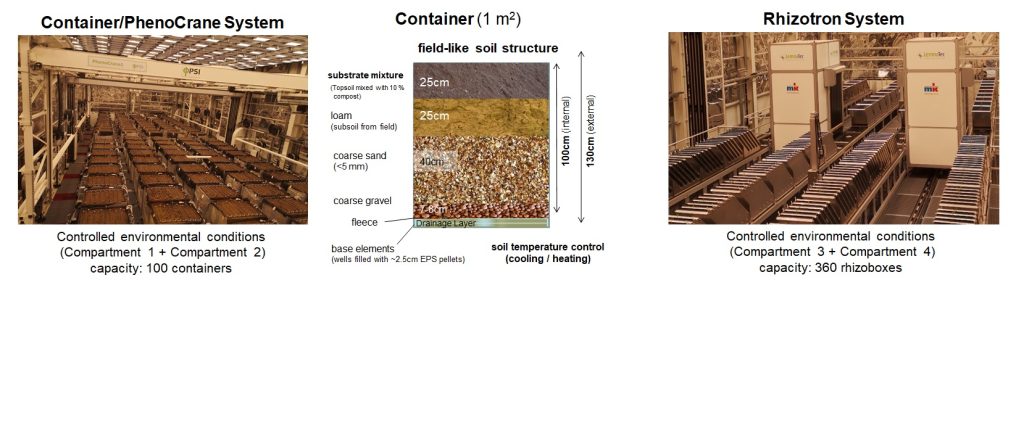
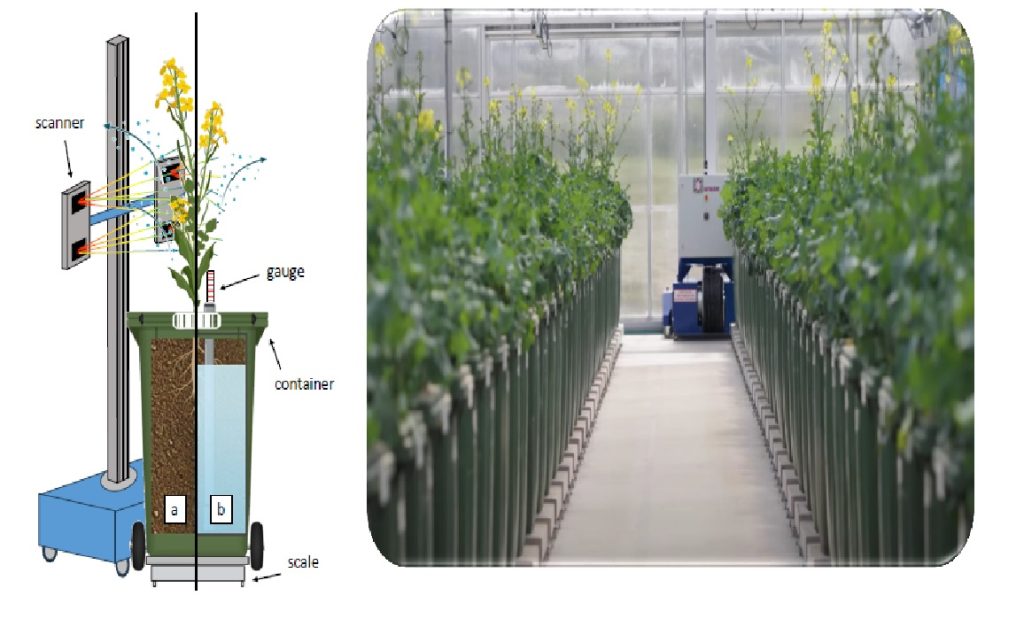
Work package 3 addresses the growth dynamics and abiotic stress responses of Winter oilseed rape (WOSR). In order to investigate the Brassica napus plant performance under selected stress conditions the state-of-art Phenotyping facilities of the participating partners are used: The DroughtSpotter XXL precision phenotyping facility at Justus Liebig University in Giessen (JLU) is used to investigate 40 selected WOSR lines. At the Leibniz Institute of Plant Genetics and Crop Plant Researcht in Gatersleben (IPK) the abiotic stress responses of the rapeseed plants are investigated under fully controlled conditions: The Container/PhenoCrane System of the IPK PhenoSphere is utilized to investigate 12 selected lines under four treatments: control (C), autumn waterlogging (aWL), spring–summer drought (s/sDS), and combined waterlogging & drought (aWL+s/sDS). Root and shoot phenotyping experiments in the Rhizotron system are performed to analyse subsoil plant drought stress responses. Novel candidate genes are identified and modulated via TILLING or NGT.